Insights
Steven Bartlett: What All 881 Videos Reveal
The Diary of a CEO is the biggest business podcast on YouTube, and it got there by leaving business behind. The business episodes that remain are its worst performers.
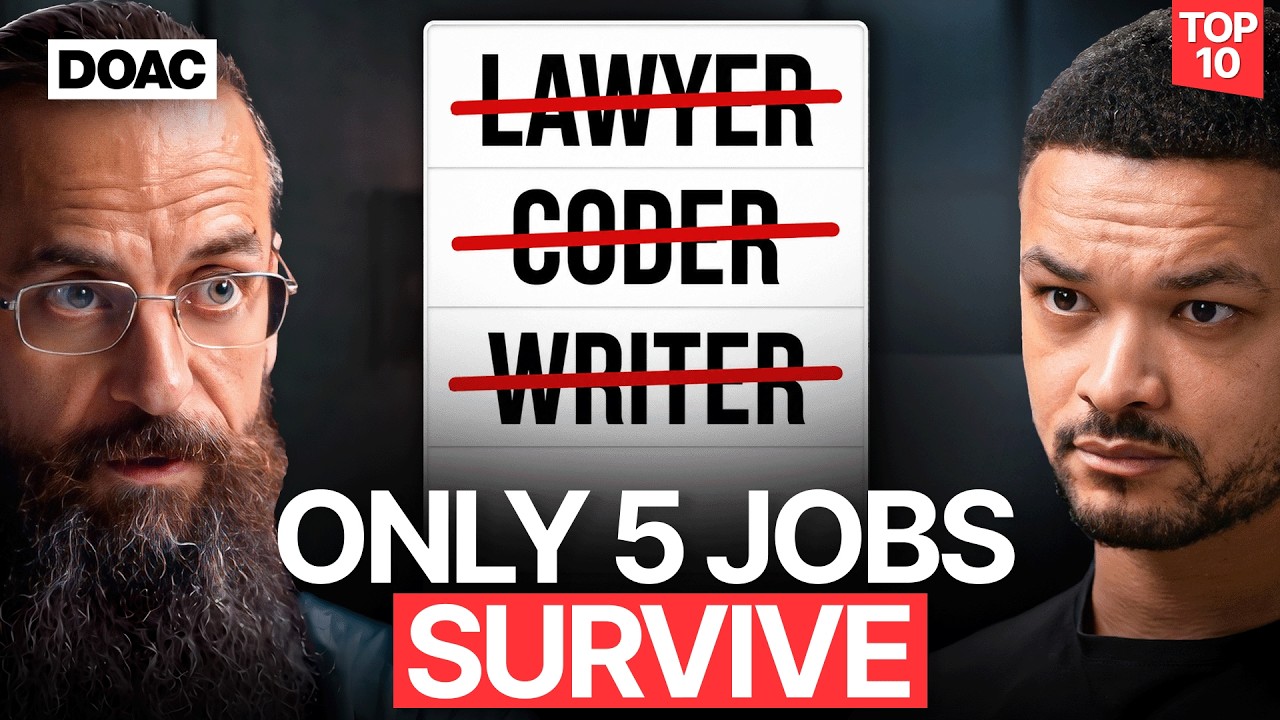
The Diary of a CEO has 19.3 million subscribers and its main-channel episodes have earned 1.59 billion views. Steven Bartlett interviews a guest for around two hours, roughly twice a week, and has done for years. That's the whole format.
I put all 881 main-channel videos through my analysis tools: 529 long-form episodes and 350 Shorts, with every view, like and comment count. A 2021 episode has had five years to collect views, so comparing raw totals would make every old episode look like a winner.
Instead each episode is compared only with the ones published around the same time. I also read the transcript of his biggest episode and pulled the UK search data.
The analysis in this article comes from the same process I run on client channels every month inside Channel Intelligence.
What came out is a different kind of channel from the five torn down before it. The others win by outliers. This one wins by almost never missing.
The 6 findings
- The machine scaled 10.8x with output flat. Around 100 episodes a year since 2022, while the typical episode went from 323,130 views to 3,504,550.
- The biggest business podcast got big by leaving business behind. Business titles fell from 31% of output in 2021 to 6% now, health rose from 10% to around 28%, and the remaining business episodes get 0.88x across the whole library, and about par since 2024.
- The guests don't bring the audience. The show makes the guests famous. His biggest episodes star people with 5,400 to 9,900 UK searches a month, while his own name and the show's take 78,600.
- The floor is the moat. 94% of episodes since 2024 clear a million views. The worst did 258,162.
- The house title format does the winning. 418 episodes use "Name: Claim". The 85 that don't get 0.85x. Episode length barely moves the numbers at all.
- The clips live on a separate channel, and that's why they still work. 1,359 clips, 351 million views, median 49,667, kept off the main channel.
1. The machine scaled 10.8x with output flat
| Year | Episodes | Median views | Median length |
|---|---|---|---|
| 2021 | 48 | 323,130 | 94m |
| 2022 | 95 | 569,856 | 94m |
| 2023 | 102 | 2,072,978 | 98m |
| 2024 | 101 | 2,690,347 | 118m |
| 2025 | 103 | 3,412,951 | 126m |
| 2026 so far | 71 | 3,504,550* | 110m |
Output has been pinned at roughly two episodes a week for five years. Over the same five years the typical episode's views multiplied by nearly eleven. He didn't publish more, shorten anything, or chase a format change. The same machine, run on schedule, compounded. The 2026 row is marked because its youngest episodes are still accruing.
Volume is the other road, and Simon Squibb's teardown shows what it looks like: 1,723 videos, almost double Bartlett's entire library, behind his 2.42 million subscribers. Bartlett got to 19.3 million on around 100 episodes a year that don't change.
The takeout to try yourself: Pick a cadence you can hold for years, then improve the format instead of the frequency. Codie Sanchez tripled her Shorts output and her typical Short lost three quarters of its views. Bartlett held output flat and grew 10.8x.
2. The biggest business podcast got big by leaving business behind
The Diary of a CEO began as what its name says: a business interview podcast. The library shows exactly when that stopped being true.
The channel has had three eras:
The year-by-year title data shows the handover happening:
The remaining titles are scattered across AI, world affairs, psychology, relationships and one-off guest stories, and none of those themes holds a stable share. Health is the one topic the channel has committed to, and business is the one it has dropped.
The audience had been asking for the change long before it came. Back in 2021 and 2022, when a third of the titles were business, those business episodes got 0.61x what his typical episode of the time got, while the handful of health episodes got 1.68x. The data was pointing at health for two years before the catalogue followed it.
Then look at when the growth arrived. The flip happened in 2023, health going from 8% of titles to 30%, and the median episode nearly quadrupled the same year, 569,856 to 2,072,978. The channel kept the business brand, the suits and the name, and changed what it actually sells. The business episodes that remain get 0.88x across the whole library, dragged down by the 2021 and 2022 ones at 0.56x. Since 2024 they sit at about par, close to 1.01x.
The same shape holds across this series. Codie Sanchez's dollar-sign titles get 0.67x. Mel Robbins' most valuable subject by advertiser money was the one her audience searched for least. Business channels win on everything except sounding like business, and the biggest one on the platform is big precisely because it acted on that.
The takeout to try yourself: Your audience buys the outcome of your subject, and clicks on the human problems around it. Group your own titles by topic words and compare each group against videos from the same period. If one topic keeps beating your main one, that gap is your next year of content.
3. The guests don't bring the audience. The show makes the guests famous
As we revealed in Holly Willoughby's YouTube teardown, her channel borrowed everything: her guests out-searched her show and her views fell whenever the guest was smaller. The Diary of a CEO is that machine inverted.
| Name | UK searches/mo | Their episode's views |
|---|---|---|
| steven bartlett | 60,500 | — |
| diary of a ceo | 18,100 | — |
| joe dispenza | 9,900 | 15.6M |
| robert greene | 8,100 | 20.3M |
| professor jiang | 5,400 | 16.8M |
| mo gawdat | 5,400 | 11.6M |
A professor with 5,400 UK searches a month did 16.8 million views. The audience didn't arrive for the guest; the machine delivered the guest to an audience it already owns. Some of those guest search numbers were themselves created by the episodes, which is the point: the show manufactures the fame it appears to borrow.
Daniel Priestley, whose channel we also tore down, has sat in that guest chair three times. His episodes did 4.3 million, 5.7 million and 1.9 million views, numbers the videos on his own channel don't approach. The fame flowed from the show to the guest, not the other way round.
The takeout to try yourself: If your channel depends on guests, check who out-searches whom. When the guests out-search the show, every booking smaller than the last one shrinks the channel. The position to build toward is the stage mattering more than who stands on it.
4. The floor is the moat
Since the start of 2024, 94% of episodes have cleared a million views: 233 of 249. The worst episode in that whole period did 258,162. And 57% of every scored episode in the library lands within half to double its period's typical views, which makes this the lowest-variance channel in the series by a distance.
Most big channels are built on outliers: a handful of hits and a library of misses. Codie Sanchez's biggest video did 36 times what her videos of that period typically got.
Bartlett's biggest since 2023 did 11 times his, and the gap between the two channels sits at the other end: her worst videos disappear, his worst still does a quarter of a million views. He doesn't out-hit anyone. He has removed the miss.
The takeout to try yourself: Measure your own floor, not just your ceiling: what do your worst three videos from the last year do against your typical one? A rising floor means the format is working. A rising ceiling on a flat floor means you got lucky.
5. The house title format does the winning
418 of the 503 scored episodes use the same title shape: a name or credential, a colon, then a claim. "Robert Greene: How To Seduce Anyone." "The AI Safety Expert: These Are The Only 5 Jobs That Will Remain." The 85 episodes that leave that shape get 0.85x.
Meanwhile the thing most channels agonise over barely registers here. Episodes of 60 to 90 minutes get 1.14x, 90 to 120 minutes 0.91x, over two hours 1.08x. Length is close to noise on this channel. The packaging shape isn't.
Put the observations together and his winning title is a formula you can fill in:
[The credential]: [A specific claim with a number, a date or a deadline in it]
- The credential does the trust. "The AI Safety Expert", "Leading Neuroscientist", "CIA Whistleblower". Credentialed titles get 1.08x, and the credential works even when the name is unknown.
- The colon does the promise. Everything after the colon is the promise the viewer buys. Episodes with the colon shape beat the ones without by 15%.
- The claim is specific and human. "These Are The Only 5 Jobs That Will Remain", "You Only Have 3 Years Left". Numbers and deadlines, about health, money fears or survival, and never about the guest's industry.
- No first person. "I", "my" and "me" get 0.78x on this channel and cost Mel Robbins 23% on hers. The viewer's stakes, never the host's diary.
The takeout to try yourself: Write your next title as [your credential or your guest's]: [one specific claim with a number in it], and say it about the viewer's problem rather than yourself. Then treat any departure from the format as a test, and keep whichever wins on your own numbers.
6. The clips live on a separate channel, and that's why they still work
The Diary of a CEO Clips is its own channel: 1,359 clips, 351 million total views, a median of 49,667 per clip. The main channel carries only 350 Shorts of its own.
Compare Codie Sanchez, one teardown ago: she runs eight Shorts a week on her main channel, and their typical views fell by three quarters while the volume went up. Bartlett's clip machine is at least as industrial, and it runs somewhere it can't muddy the main channel's numbers, its recommendations, or what a new visitor sees when they land on an episode page.
The takeout to try yourself: If clips are part of your strategy, consider giving them their own home. A second channel keeps your main channel's per-video economics readable and stops clip viewers being what the algorithm learns your audience is.
Put simply
None of the six findings is a trick you can copy this afternoon. The machine is the finding. A format held for five years, a cadence that hasn't moved, a title shape repeated 418 times, and a floor so high that the channel grew 10.8x without one viral fluke doing the work.
The transcript of his biggest episode shows the same discipline at minute level: the guest's credential and a dated, falsifiable prediction inside the first thirty seconds, before a word of small talk. 21.5 million people watched an AI safety professor they had never heard of, because the machine told them within seconds why they should.
Steven Bartlett built the most consistent content operation in this series, and the parts most channels copy, the studio, the length, the guest list, turn out to matter less than the parts nobody copies: the cadence, the title shape, and the refusal to miss.
Method and limitsSources, dates and what this can't see
Public data only, pulled 4 September 2026: the full 881-video main-channel library and the 1,359-video Clips channel from the YouTube Data API, the transcript of his biggest episode read in full, and UK Google Ads for search volumes, because his audience's centre of gravity is British. Two livestreams and one malformed entry were excluded.
Every per-episode comparison scores an episode against the median of the episodes he published in the same six-month period, and only episodes over 90 days old are scored, so age can't masquerade as performance.
Groups under 10 episodes aren't reported. YouTube changed how it counts a view on 24 August 2026; the period medians are almost entirely pre-boundary, and the 2026 row is marked where young episodes make a figure provisional.
There's no Studio access here, so nothing estimates impressions, click-through, retention or revenue. A paid-traffic screen was run on his six biggest episodes (comments and like rate against his own channel norms) and found nothing unusual.
Analysis and write-up: Stewart Read.

Meet Stewart
Stewart Read
YouTube Growth Strategist
I've run YouTube channel management for 8-figure businesses, turning channels into reliable sources of leads, clients and measurable revenue rather than views alone.
Using the suite of channel analysis tools I built myself, I pinpoint exactly what makes your audience click, watch and convert, then turn those findings into videos that bring buyers to your business.
Channel Intelligence
The monthly service behind this analysis. A written briefing on what your channel returned to the business, and a video walkthrough where I take you through the findings myself.
See how Channel Intelligence works