Insights
Mel Robbins' YouTube Strategy: 1,503 Videos
Mel Robbins' typical video went from 105,115 views to 475,383 in two years. She didn't get more famous. Eight things separate the videos that worked from the ones that didn't, and five are title edits you can make today.
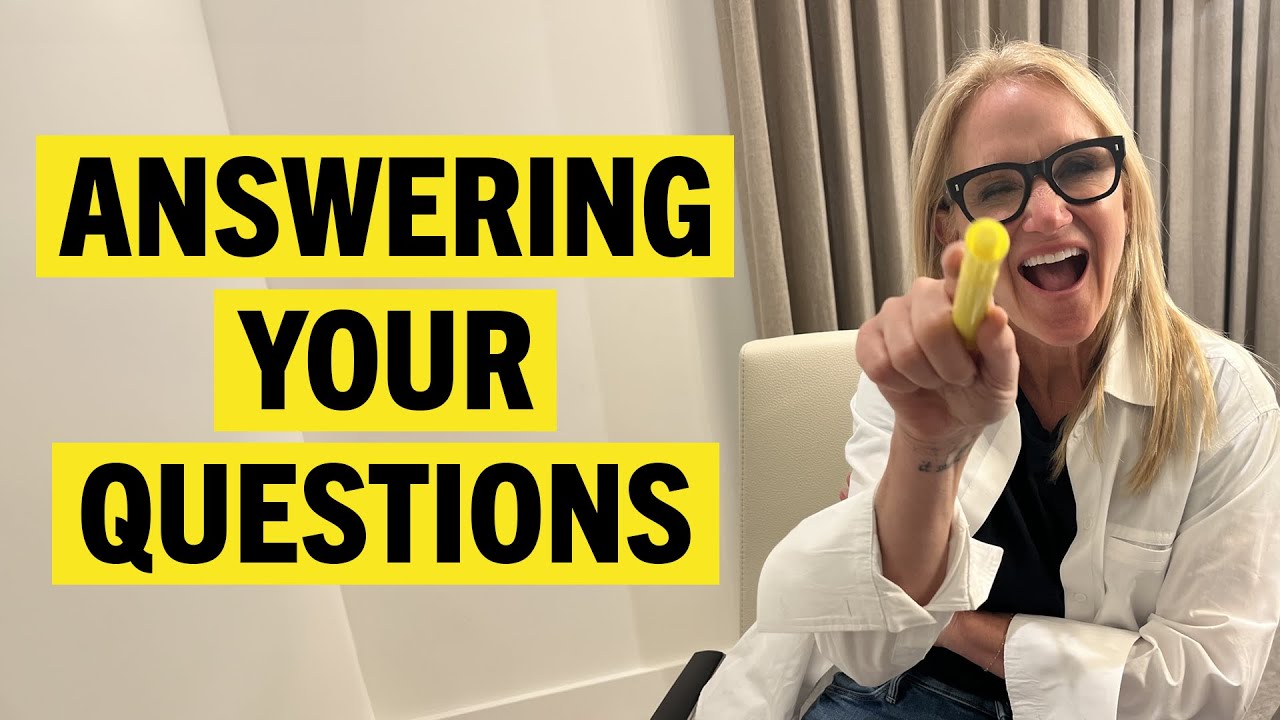

In April 2024 Mel Robbins went live to sell a coaching programme. Fifty-five minutes, no guest, and a title that promised nothing: "Answering Your Questions... Q&A". It has 6,951 views.
Six months later she uploaded an hour and a quarter with a Stanford neurosurgeon, titled on what he would hand the viewer. That one has 5,052,269 views.
Only one of the differences between those videos is worth copying. They're different formats, which matters enough that livestreams and uploads are counted separately everywhere below. What you can act on is the offer. One named a credential and made a specific promise. The other asked people to turn up and see what came up. That's the pattern running through her uploads, and it's the sturdiest number in this article.
I analysed the channel with the analysis tools I've coded and use for my clients. All 1,503 videos the channel still shows, not a sample.
The 8 formulas
Eight came out of the analysis. Each was tested against her own era, then re-tested several ways to see whether it held up across her library and outside her biggest hits. Five of them are title edits you can make today: 3, 4, 5, 7 and 8. Number 2 is a decision for your next video, number 1 needs a guest, and number 6 changes which numbers you compare in your own analytics.
The takeout to try yourself: These are the formulas that show up in Mel Robbins' content, at her size, in her subject. Everything on YouTube is a test, so treat them the same way she would have: pick one, run it on your own library, and keep it if your numbers agree. Some will work harder for you than they did for her.
- Long-form titles: name the credential. Titles carrying a doctor, professor, neuroscientist or surgeon get 1.58x the rest of her uploads. 46 videos, and it held on every cut.
- Long-form: go longer. Since 2023 the bands get 0.40x, 0.77x, 1.14x, 2.00x as length rises. No exception at any band.
- Long-form titles: never write in the first person. "I", "my" and "me" cost about 23% on her uploads, and that held on every cut with enough videos to test.
- Titles: use "how to". Worth 1.16x on her long-form uploads and 1.45x on her Shorts.
- Shorts titles: put your own name in. Worth 1.39x across 807 of her Shorts.
- Livestreams are a separate product. Her 164 livestreams run a median 30,370 views against 329,401 for her 429 uploads.
- A colon still helps, but less each year. 1.15x across her uploads, and the effect is fading in her recent work.
- Question marks cost a little. 0.72x across her uploads, on 14 videos, so treat it as a hint.
First, the thing everyone asks
The first objection to any of this is that the views were bought. The engagement says otherwise. Bought views watch and don't engage - they don't usually press like, or leave comments. Hers do both. Her six biggest videos run like rates between 2.3% and 4.1%, and comment rates between 0.07% and 0.21%, which is her channel's own normal at that reach.
Her oldest hit is the strictest test, because it's the one with nothing to hide behind. "The Secret to Stopping Fear and Anxiety", published in 2017, has 5,438,729 views and 170,260 likes. That's 3.13%, on a video nine years old.
What it isn't
It isn't the old catalogue. Her biggest 2017 video needed nine years to reach 5,438,729 views. A 2024 upload is at 5,052,269 after less than two, and a 2025 upload is at 5,000,020 after less than one. The new work matches the legacy work in a fraction of the time.
It isn't Shorts. They're 60.5% of her library and 37.4% of her views.
It isn't a quiet year. She published 421 videos in the twelve months to 20 August 2026 and gained 1,670,000 subscribers, reaching 6,050,000.
Four things are left.
1. She stopped being the only expert and started booking them
Mel Robbins isn't a doctor. Since the podcast took over her channel, most of her best videos are someone who is.
Long-form titles naming a medical or academic credential get 1.58x the views of the rest of her uploads. That's 46 videos, and it's the sturdiest number in this article: it survived every re-test, holding between 1.38x and 1.78x on each one.
The top of her library is a directory: a Stanford neurosurgeon, a Harvard addiction specialist, a Mayo Clinic cancer doctor, the #1 menopause doctor, Harvard Business School's #1 professor, a trial lawyer, an exercise physiologist.
Her name is still on the thumbnail. The credential is what the title sells.
The takeout to try yourself: If you're the only expert your channel ever features, you've capped it at the size of your own authority. Booking someone with a credential you don't have is the cheapest way to raise that ceiling.
2. She went the wrong way on length, and won
The woman who made her name on a five-second rule now publishes hour-long episodes. In 2017 her median long-form video ran 6.7 minutes. This year it runs 68.2 minutes, and 99% of her long-form is over 35 minutes.
The obvious reading is that she got away with it. The data says the length is doing work.
In raw terms the same pattern holds: a median of 70,150 views under 30 minutes, against 769,985 over 90.
I can't prove the mechanism from outside. Retention and traffic sources are visible only to the account owner. The honest version is that her long videos aren't long recordings of short ideas. They're one guest, one subject, and a chapter list built like a contents page.
The takeout to try yourself: Before you cut a video down, check whether the subject is worth an hour. A thin idea stretched to sixty minutes fails, and so does a deep one cut to fifteen.
3. The Shorts cost her almost nothing
She publishes roughly three Shorts for every long-form video, and the gap between what they're worth has widened every year.
In 2022 her median long-form video was worth 1.3 Shorts. This year it's worth 8.9. She hasn't cut the Shorts, and the share of her uploads that are Shorts has risen to 77%.
The Shorts are cut from episodes she is already recording, so they cost her almost nothing, and they're where a stranger meets her first. The episodes are where the audience is built.
The takeout to try yourself: Judge Shorts on what they cost, not on what they return. If yours are cut from long-form you were making anyway, a falling Shorts median isn't a problem. If they're made from scratch, it's a problem.
4. Her livestreams do a tenth of what her uploads do
Sort her long-form library by how each video did against her videos from the same period and the bottom isn't random. Seven of the eight worst are livestreams, and six of those went out inside nine days in April 2024.
| Her five worst-scoring long-form videos | Format | Views | Score |
|---|---|---|---|
| Answering Your Questions... Q&A | Livestream | 6,951 | 0.04x |
| I Never Do This... Late Night Q&A! | Livestream | 8,165 | 0.05x |
| The Path Behind You Is No Longer An Option. | Livestream | 13,791 | 0.08x |
| There is something I need to tell you | Livestream | 17,871 | 0.09x |
| You Are Meant For More. Watch This | Livestream | 16,929 | 0.10x |
Across the whole library her 164 livestreams sit at a median of 30,370 views, against 329,401 for her 429 uploads. That's a gap of roughly ten to one, on the same channel, in front of the same subscribers.
The video at the bottom is the most instructive one on the channel. It's a live Q&A published in April 2024, and about a third of the way in it becomes a pitch for her six-month coaching programme, with a closing deadline. It has 6,951 views on a channel with six million subscribers.
Nearly every video where she asks for something is also a livestream, and not one of the sixteen names a guest or promises a payoff in the title. From outside there is no way to separate which of those is doing the damage. What can be measured is that the launch went out on the format with the smallest audience she has, carrying the weakest offer she puts on a title.
The takeout to try yourself: Judge a livestream against your other livestreams, never against your uploads, or you'll read a format difference as a failure. And if you're launching something, put the ask inside a video people already turn up for.
What the transcripts show
I pulled the opening of her biggest episode since the podcast took over the channel, and of the livestream at the bottom of the library. Her biggest video of all is from 2017, made before the podcast existed, so its opening tests nothing about how the channel works now.
The neurosurgeon episode, 5,052,269 views, opens at 0:00 on the guest. Mel isn't in it:
"With manifestation, or that terminology, there's a lot of woo-woo and pseudoscience. Actually, the ability to manifest is fundamentally based in neuroscience."
He talks for one minute and thirty-eight seconds before she says a word, and when she arrives it's to welcome the listener rather than to establish herself. The credential is doing the work, and she has given it the whole opening.
The livestream opens like this:
"hey oh my gosh this worked I'm so excited to be here with you um I have been wanting to get on live and start giving you uh coaching and answering your questions live for a long long time"
Two minutes in, she is still waiting for people to arrive in the chat. A live opening is spent on the room. A recorded one can be spent on the viewer.
The takeout to try yourself: Give the first twenty seconds to the viewer's problem or to someone with a credential. Anything you say about your own excitement is spent from the same budget, and on a livestream you're spending it before the video has an audience.
The search layer
Her strongest new subject is money, and it's also the most valuable ground she stands on. Since 2024, money and career titles get 2.4x the rest of her uploads. That's only nine videos, so on its own it would be a hint. The raw numbers back it: "The Best Financial Advice You'll Ever Hear" has 5,000,020 views, "5 Money Rules" has 3,914,828, and "Why You're Broke" has 1,888,748.
Her audience is mostly American, so these are United States Google Ads figures, in US dollars, pulled on 20 August 2026. Volume counts searchers. Cost per click is what advertisers will pay for one of them.
| Term | Searches/mo | CPC | Advertiser market |
|---|---|---|---|
| narcissist | 673,000 | $0.32 | $215,360 |
| mel robbins | 201,000 | $0.40 | $80,400 |
| menopause symptoms | 110,000 | $2.25 | $247,500 |
| personal finance | 22,200 | $12.09 | $268,398 |
| the 5 second rule | 18,100 | $1.38 | $24,978 |
| how to stop overthinking | 14,800 | $2.15 | $31,820 |
| how to stop procrastinating | 9,900 | $1.99 | $19,701 |
| how to invest money | 8,100 | $7.70 | $62,370 |
| how to manifest | 8,100 | $0.86 | $6,966 |
| how to build confidence | 5,400 | $1.32 | $7,128 |
Narcissism brings thirty times more searchers than personal finance and advertisers pay a thirty-eighth as much per click, so the smaller subject is worth more per month to the people buying the traffic.
That's the pattern across her whole subject list. The topics that bring her the most people sit at the cheap end, and the one advertisers pay most for is the one she started last.
The same check settles a question the analysis raised. Her signature idea hasn't faded: "the 5 second rule" still takes 18,100 US searches a month and her own name takes 201,000. In the UK the same phrase takes 720. Two markets, one phrase, a 25-fold gap, which is why the market has to be named whenever a search figure is quoted.
The takeout to try yourself: Volume counts searchers and cost per click prices them. Check both before you commit a year of content to a subject, because the biggest lane in your niche is often the cheapest one.
One rule that didn't survive
Putting a word in capitals looked like a rule. Across the whole library, long-form titles with an ALL-CAPS word get 1.32x the rest, which is the sort of number that ends up in a listicle.
Split the library up and it falls apart. On the older half it's 1.59x. On the newer half, 0.70x. Across the podcast era, 0.87x. Take her livestreams out and the whole thing lands at 1.07x, which is nothing. The capitals mark the era when she was making short motivational videos, and those did well for reasons unrelated to capital letters.
Every other formula above cleared that test. This one is published because it didn't.
Put simply
She gives away more properly researched health and money content than most people sell, she books guests who are better qualified than she is and lets them talk, and she has added 1,670,000 subscribers in a year while doing it.
The uncomfortable part is what she gave up to do it. She had a technique with her name on it, and the channel that works now is built on other people's credentials, in subjects she isn't the authority on. Her median video is ten times longer than the idea that made her.
She didn't defend the five-second idea. She became the person who books the expert, and the long-form median went from 105,115 to 475,383 across the two years that followed.
Method and limits
Public data only, with no access to her account. The full library of 1,503 public videos was captured on 20 August 2026, alongside tracked daily subscriber history for the twelve months to that date and the auto-generated captions. Engagement rates were verified against the YouTube API rather than taken from the export.
Livestreams are counted separately from uploads throughout. 164 of her 593 long-form videos are livestreams, and every long-form figure above is her uploads alone. Videos are compared against their own era and their own format rather than against the library as a whole, and each rule was re-tested several ways before it was published. Where a rule weakened under one of those tests, the article says so.
Search figures are Google Ads for the United States, her main market, in US dollars, the currency that source reports. Each term was also checked to confirm the searches belong to her idea rather than to a phrase that happens to match. All view figures predate 24 August 2026, when YouTube changed what counts as a view on long-form, so nothing above spans that boundary. Retention, click-through rate, traffic sources and revenue are visible only to the account owner and aren't estimated anywhere above. Subscriber deltas are approximate, and video counts are a floor, because deleted uploads are invisible from outside.
Corrected on 23 August 2026. The first version pooled her livestreams with her uploads. Separating them removed one title rule that turned out to be a format artefact, and moved several other figures. The numbers above are the corrected ones.
Analysis and write-up: Stewart Read.

Meet Stewart
Stewart Read
YouTube Growth Strategist
I've run YouTube channel management for 8-figure businesses, turning channels into reliable sources of leads, clients and measurable revenue rather than views alone.
Using a class-leading suite of channel analysis tools he built himself, he pinpoints exactly what makes your audience click, watch, and convert - then turns those findings into videos that bring buyers to your business.
Channel Intelligence
The monthly service behind this analysis. A written briefing on what your channel returned to the business, a video walkthrough of the findings I record myself, and a plan for the videos to make next.
See how Channel Intelligence works