Insights
Alex vs Leila Hormozi: What 9,275 Videos Reveal
Leila Hormozi's three biggest videos beat or match Alex Hormozi's three biggest, on well under half his subscribers and in a third of the time. Hers are better liked than his too.
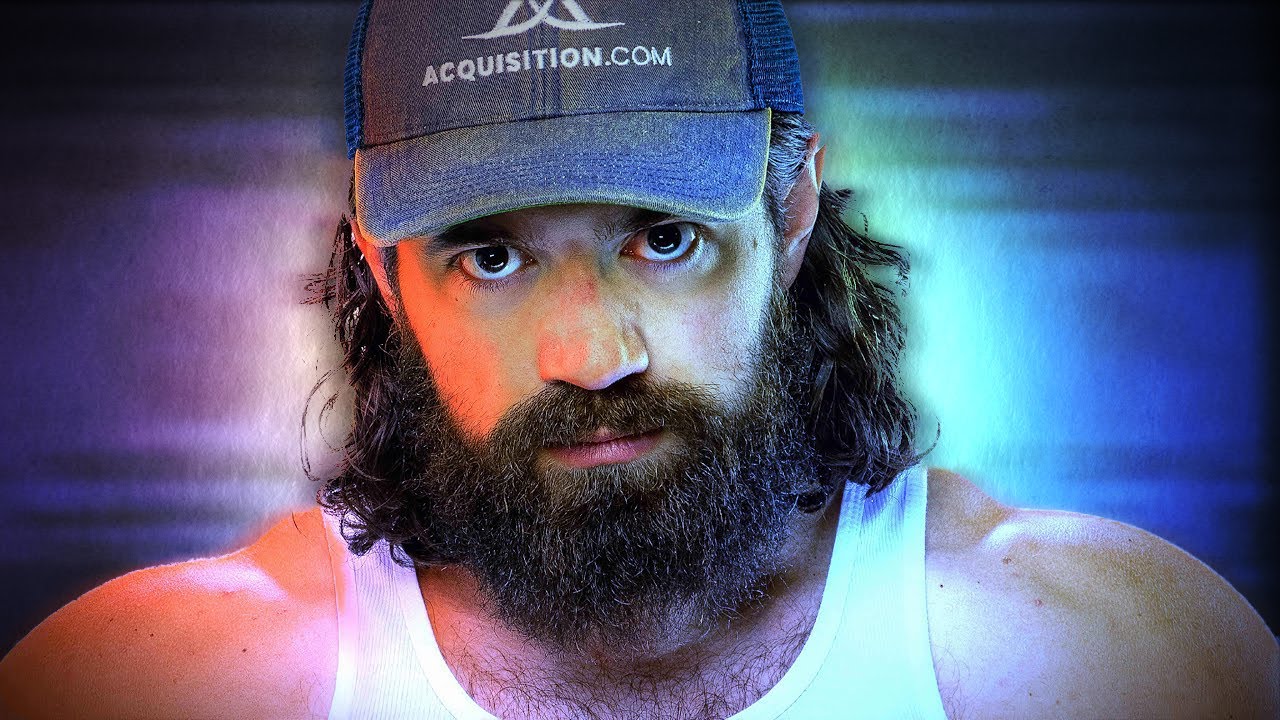

Leila Hormozi's three biggest videos each match or beat Alex Hormozi's three biggest.
| Alex | Leila | |
|---|---|---|
| Biggest | 4,505,153 | 8,690,712 |
| Second | 4,032,792 | 4,052,490 |
| Third | 3,594,264 | 3,602,181 |
She has 38% of his subscribers.
And she did it in about a third of the time. His three took a median of 1,009 days to get there. Hers took 364.
How is this even possible?
I analysed both channels with the analysis tools I've coded and use for my clients. Every video the channels still show, not a sample.
The formulas
Seven came out of the analysis. Each one held on both libraries independently, and the evidence for each is further down.
The takeout to try yourself: These are the formulas that show up in the Hormozis' content. They're what their audience rewards on their channel, at their size, in their subject. Nothing here transfers automatically to yours, and the honest way to use any of it's as a hypothesis: pick one, have your channel manager run it against your own library, and keep it only if your numbers agree.
- Long-form titles: put the year in. 2.25x on his channel, 2.03x on hers, each judged against videos from the same period.
- Shorts titles: write in first person, not second. "I" and "my" lift 1.41x for him and 1.38x for her. "You" and "your" cost around 10% on both. Nearly 3,700 videos behind that one.
- Shorts titles: put the money figure in. 1.75x his, 1.64x hers. It doesn't carry over to long-form, where it earns nothing on either channel.
- Openings: name the subject inside ten seconds. Both their biggest videos do it. Both their worst take minutes to get there.
- Openings: never publish a room you were already in. Repurposed workshops and raw internal sessions are the worst-performing shape on both channels.
- Packaging: if you're not famous, the thumbnail has to say what the viewer gets. His biggest carries no words at all. Hers carries three.
- Topic: without fame behind you, the topic decides the result. Worth 3.6x on her channel and 1.14x on his.
First, the thing everyone asks
Did she buy the views?
Probably not, and the numbers suggest it clearly. If views are bought, the people watching don't like the video, so the like rate collapses. Hers went the other way.
Her top three run like rates of 4.45%, 4.10% and 3.31%.
His run 2.65%, 3.26% and 2.84%.
Her biggest videos are better liked than his biggest videos, per view. That's the opposite of what paid traffic looks like.
One more, because it's the more interesting number. Her biggest video reached 5.14 times her entire subscriber count. His reached 1.02 times his.
His hit went to his audience. Hers went well past hers.
The takeout to try yourself: Before you believe any outlier, check the like rate against that channel's own normal. Bought views watch and don't engage - they don't usually press like, or leave comments.
What it isn't
It isn't that she posts more. He out-published her nearly two to one last year, 1,646 videos to 880.
It isn't Shorts versus long-form. Shorts are 90% of his library and 93% of hers. Structurally these are the same channel.
It isn't that his Shorts win and hers don't. I assumed this one going in. Measured against their own era, 24.9% of his Shorts overperform, against 21.1% of hers. Near enough level.
Three things are left.
The takeout to try yourself: Before you copy anything from a bigger channel, rule out the boring explanations first. Most gaps turn out to be output or audience size, and neither is a strategy you can borrow.
1. She stopped making content about running a company
I classified every long-form title on both channels into topic families, in code.
Her mix, 2021-22 against 2025-26:
- Business operations: 33% down to 19%
- Hiring and leadership, the subject she is world class in: 20% down to 6%
- Sales and marketing: 5% down to zero
- Self and mindset: 14% up to 30%
Alex went the other way. His business operations content climbed from 22% to 34%.
Then look at the bottom of her library. Score all 280 of her long-form videos against their own half-year, and three of the five worst are repurposed live workshops.
Second from bottom, out of 280, is a video called "the new era of acquisition.com".
The one about the company is close to the worst thing she has ever published.
The takeout to try yourself: Sort your own uploads by topic and check where your worst performers cluster. If they're the ones about your company, that's the audience telling you what they came for.
2. On his channel the topic barely matters. On hers it decides everything.
Same test, both channels.
From 2024 onwards, her self and mindset content beats her business content by 3.6x.
His gap is 1.14x. And his sits between 1.11 and 1.14 however I cut it. He is the control group, and he barely moves.
My best explanation is that his audience shows up for him, so the topic hardly matters, while hers still shows up for the subject. I can't prove that from outside. Traffic sources and retention are visible only to the account owner.
The practical version holds either way. If you're not yet famous enough for people to watch you read a phone book, your topic is doing the work. Picking the wrong one is expensive. Ali Abdaal changed subject five times in nine years, and the analysis of all 1,458 of his videos shows his typical long-form video growing from 22,095 views in late 2017 to 740,329 in late 2023 across those changes, so a change of subject doesn't have to cost a channel its audience.
The takeout to try yourself: Fame lets a channel survive a bad topic choice. Until your channel has that, treat every topic decision as the thing that decides the result.
3. She turns strangers into subscribers three times more efficiently
Views on their own are a vanity metric. The rate underneath isn't.
It takes Alex about 348 views to earn one subscriber. It takes Leila about 120.
Per video published, he adds around 516 subscribers. She adds around 1,008.
Over the last twelve months she gained more subscribers than he did in absolute terms, 887,000 to his 850,000, on roughly half the output.
He is running a reach machine, and an extraordinary one. Over a billion lifetime views. She is running a recruitment machine.
The takeout to try yourself: Divide your views gained by your subscribers gained over the same period. That single number tells you whether your channel is being watched or actually joined.
What the transcripts show
I pulled the openings of six videos. The most recent, best and worst long-form on each channel.
Her best video opens at 0:00:
"What if I told you that confidence has nothing to do with feeling ready and everything to do with doing it scared?"
Three credentials by 0:12. Three promises by 0:19. The thesis stated flat by 0:27.
His best opens on numbers before a single word of context. A $46.2 million exit. $106 million in a weekend. Then he subverts them by 0:09, shrinks it to something reachable by 0:15, and is sleeping on a gym floor by 0:22.
Both name the subject inside ten seconds. Both are excellent.
Now his most recent upload. Fifty-four minutes long. It opens mid-sentence:
"time to figure out. Um."
Just before three minutes, he is adjusting the camera on-mic.
Her worst long-form does the same thing from the other direction:
“what's up guys so today we have a Q&A from one of our most recent workshops.”
The pattern is the same on both channels. Publish a room you were already in, and it underperforms. Build the first twenty seconds deliberately, and it doesn't.
The takeout to try yourself: Watch your own last upload with a stopwatch. If the subject isn't named in the first ten seconds, that's the cheapest fix on your channel.
The title rules that held on both channels
I only trust a title rule if it survives on two separate libraries and holds when I vary the method: re-run it on recent videos only, re-re-run it several other ways to see whether it held. Most of what I tested moved around. Four didn't.
Put the year in a long-form title. 2.25x on his channel, 2.03x on hers. One caveat before you copy it: those videos cluster around January, so some of the lift may belong to the new-year slot rather than the words.
On Shorts, write in the first person. Titles carrying "I", "my" or "me" get 1.41x on his channel and 1.38x on hers. This is the sturdiest number in the article, drawn from 907 of his Shorts and 701 of hers.
On Shorts, drop the second person. "You" and "your" cost about 10% on both channels, across 1,130 of his and 952 of hers. The two rules are the same rule seen from opposite ends: on a Short, tell them what happened to you rather than what they should do.
On Shorts, put the money figure in the title. 1.75x his, 1.64x hers. It doesn't transfer: the same device in a long-form title earns nothing on either channel. It buys the click at three seconds and can't hold a fifteen-minute promise.
The takeout to try yourself: Rewrite your next Short's title in the first person with a number in it, and take "you" out. That's three of the four rules in one line, and it costs nothing to test.
The search layer
This is where it stops being a content story.
Her name is searched around 22,200 times a month. His around 49,500. But advertisers bid $7.33 a click on her name and $6.30 on his. Hers is the more expensive name to buy.
Now put that next to the topic shift.
The business lane she left is small and expensive. "How to scale a business" gets around 590 searches a month at $14.65 a click.
The mindset lane she moved into is large and cheap. "How to stop overthinking" gets around 14,800 a month at $2.37.
Multiply the two and you get the size of the advertiser market behind each phrase. The scaling lane is worth about $8,600 a month. Overthinking alone is worth about $35,000.
She didn't trade her expertise for a bigger but worthless audience. She traded a narrow lane for one carrying twenty-five times the search volume.
And she is winning it. Her confidence video sits in the top three on YouTube for "how to build confidence", ahead of TEDx and Mel Robbins.
Look at who she shares that page with. Of the ten results I pulled: a psychiatrist, two therapists, Psych2Go twice, Psych Hub, a pharmacist and a Buddhism channel. She is the one business figure in the set.
Before anyone goes and makes an overthinking video, neither lane is open. Confidence has TED sitting on it. Overthinking is contested rather than crowded, which is a different thing from easy.
The takeout to try yourself: Price your topics before you pick them. Search volume tells you how many people are looking; the advertiser bid tells you whether any of them buy.
Put simply
This is a comparison between two people operating at a level almost nobody reaches.
He built one of the largest business-education channels on the platform, and gives most of it away free. She rebuilt hers in public, in front of an audience that already knew her as somebody's co-founder, and came out the other side with her own.
Put simply, and the reason I wrote this up: her strongest stretch came after she stopped making content about the thing she is most qualified to teach.
The takeout to try yourself: The topic you're most qualified to teach and the topic your audience wants are two different questions. Check which one your channel is answering.
Method and limits
Public data only. Both full libraries were pulled via the YouTube Data API on 14 August 2026 - 5,464 of his videos and 3,811 of hers - with subscriber history from tracked daily counts over the twelve months to that date, and transcripts from auto-generated captions.
Every performance comparison is either a tracked rate over that fixed window or an index that compares each video against the videos published around the same time, with recent uploads excluded until they have settled. That strips out channel growth, so a 2023 video and a 2026 video can be compared honestly rather than the older one looking like a hit by default.
Section 2 covers 74 of her videos and 139 of his. The year-in-title rule covers 28 of his and 13 of hers, and thirteen is a hint rather than a law. Search figures come from Google Ads and are in US dollars; the YouTube results pages were checked on 14 August 2026, and positions move, so treat them as a snapshot.
Paid promotion was checked, because bought views would make any of this meaningless. Comment rate falls steadily as a video's reach grows on both channels - from 0.178% to 0.077% across Alex's long-form and 0.305% to 0.103% across Leila's - so a low comment rate on a viral video is a sign of reach, not of buying. Like rate holds far steadier, which makes it the usable signal. Every video quoted above sits at its own channel's normal like rate. The aggregate findings were also re-run with her biggest hits removed, on the assumption that every one of them was bought: the topic gap moves from 3.61x to 3.33x on her channel and stays at 1.14x on his, so the conclusions don't depend on any single video.
Retention, click-through rate, traffic sources and revenue are visible only to the account owner and aren't estimated anywhere above. Subscriber deltas over twelve months are approximate. Video counts are what each channel still shows today, which is a floor rather than a total, since deleted uploads are invisible from outside.
Analysis and write-up: Stewart Read.

Meet Stewart
Stewart Read
YouTube Growth Strategist
I've run YouTube channel management for 8-figure businesses, turning channels into reliable sources of leads, clients and measurable revenue rather than views alone.
Using a class-leading suite of channel analysis tools he built himself, he pinpoints exactly what makes your audience click, watch, and convert - then turns those findings into videos that bring buyers to your business.
Channel Intelligence
The monthly service behind this analysis. A written briefing on what your channel returned to the business, a video walkthrough of the findings I record myself, and a plan for the videos to make next.
See how Channel Intelligence works