Insights
Martin Lewis Sent More Viewers to ITV Than to His Own Business: What All 425 Videos Reveal
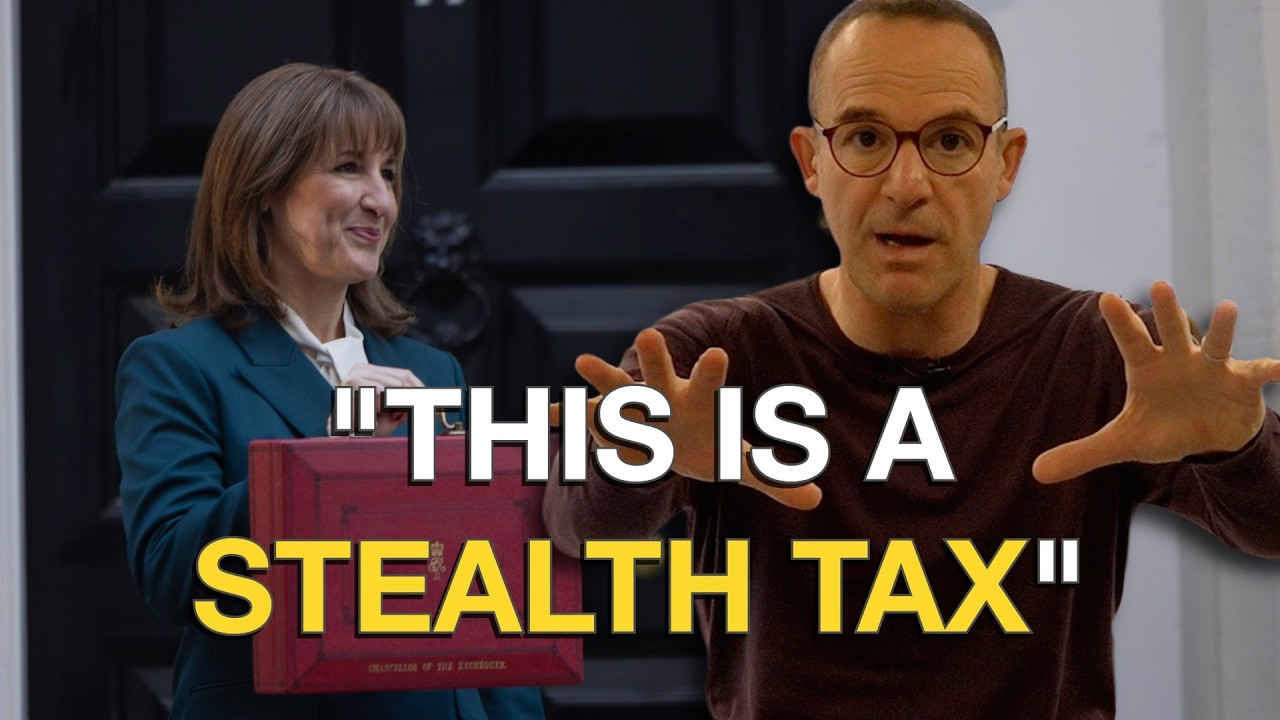
Martin Lewis opened his YouTube channel in September 2006 and it did very little for eighteen years. More than half of every view it has ever had arrived in the last twenty-one months. Then, for eight of those months, it spent that new audience sending people to ITV.
Martin Lewis has 225,000 subscribers and 425 public videos, pulled from the YouTube API on 22 September 2026. He is a rare case: a person whose name carries more commercial weight than almost any channel of that size, attached to a business he founded and a television programme he fronts. That makes his channel unusually useful to look at, because most of what anyone would call an advantage was in place long before the channel worked.
This article covers when the audience actually arrived, what changed to bring it, and where the channel has been pointing that audience since. The analysis comes from the same process I run on client channels every month inside Channel Intelligence.
What the channel shows
There are five findings.
- Eighteen years of channel history produced very little. Most of the audience arrived in the last twenty-one months, and seven of his eight most-watched videos are from the last two years.
- What changed was format and frequency, and nothing else. His fame, his trust, his programme and his website were all in place in 2006 and unchanged in 2025.
- For eight months the channel worked harder for ITV than for his own business. Between October and May, 51 uploads pointed at ITV's streaming service and 16 at MoneySavingExpert.
- Following those links means handing ITV your email address. You can't watch until you register.
- The subject he's famous for is his most average subject. Energy sits exactly on his typical video. Tax and budget explainers are the ones that travel.
The Takeout: These are the patterns in one library, at his size and in his subject, so treat each one as something to test on your own channel rather than a rule to copy. Pick one, check it against your own videos, and keep it only if your numbers agree.
1. Eighteen quiet years, then twenty-one loud months
The channel is old. It started on 19 September 2006, which makes it older than most of the businesses reading this. For most of that time it was a place where clips went to sit. He published around a dozen videos a year, sometimes fewer, and on six occasions he went dark for more than two hundred days at a stretch.
The videos he published between January 2025 and September 2026 hold more than half of every view the channel has ever collected. That's the opposite of what age normally does. An older video has had years to accumulate views and a newer one has had months, so a recent cohort holding the majority has to be earning it faster than the old one ever did.
The same pattern shows in his best work. Seven of his eight most-watched videos were published in the last two years. The eighth is from January 2009, a piece about a man paying twenty-six pounds a year for car insurance, which has quietly held its place in his top ten for seventeen years.
The Takeout: If your channel has been running a while without doing much, its age isn't what's holding it back, and its back catalogue isn't an asset you're failing to use. Look at what you've published in the last three months rather than at how long the channel has existed.
2. He changed the format and the rate, and little else
Martin Lewis was famous in 2006. He was trusted in 2006. MoneySavingExpert already existed, the television programme already existed, and the audience already knew who he was. None of those things changed in 2025.
What changed was that he started publishing short videos, and then started publishing a lot of them.
In his first eighteen years he published eight Shorts. Since January 2025 he has published 133, and those 133 have collected more views than every long video he made over the same period. The run starts as a trickle through the first three quarters of 2025 and then steps up sharply from the last quarter, where it has stayed.
The reason this matters to a smaller business is that it removes the usual excuses one by one. He didn't get more famous. He didn't find a new subject. He didn't wait for the channel to mature. He changed what he made and how often he made it, and the channel responded within a year.
The Takeout: You can't borrow his name, and you wouldn't need it. Pick the format your buyers actually watch, commit to a rate you can hold for twelve months, and judge the decision on what the channel does in the second half of that year rather than the first month.
3. Eight months pointing at ITV
Here is where a channel with a real business behind it becomes interesting. Martin Lewis founded MoneySavingExpert. He also fronts The Martin Lewis Money Show for ITV. Between October 2025 and May 2026 the channel published 98 videos, and the destinations in their descriptions aren't split the way you'd expect.
Fifty-one of those 98 videos sent people to ITVX, ITV's streaming service. Sixteen pointed at MoneySavingExpert, and half of those sixteen were Shorts, where YouTube doesn't render a description link as something you can press. So across eight months, eight videos carried a working link to the business he owns.
This is new behaviour. In 2020, all 27 of his uploads linked to MoneySavingExpert. In 2024, twenty out of twenty-one did. The first ITV link on the entire channel is dated 9 October 2025, a fortnight before the Shorts run began in earnest.
It's also stopped. Since June 2026 he has published 54 videos, two of which point at ITV. Thirty-three of them carry no link at all.
The Takeout: Open the last twenty videos you published and write down where each one sends a viewer. If more of them point at someone else's platform than at yours, or if most point nowhere, you've found the cheapest problem on your channel to fix.
4. What happens when you follow one of those links
A link to a broadcaster sounds harmless. It's worth seeing what one actually does, so I opened one of the ITVX links from his descriptions in a browser with no ITV session, declined the cookie banner, and pressed play on the episode.
ITVX won't play it. It gives you a panel headed "Sign in or register", asking for an email address before anything starts, with an upsell alongside it to a paid tier that removes the adverts. The BBC links on the channel, which go to his podcast, play without any of that, so this is an ITVX thing rather than a broadcaster thing.
So a viewer who already watches him free on YouTube is carried to a registration form. ITV takes the email address, the account and the viewing history, and then sells that person advertising or a subscription.
For Martin Lewis that's a reasonable trade. ITV commissions the programme, registrations are part of the value he delivers to the broadcaster, and he's evidently good at delivering them. The channel is doing a job and being paid for it.
The version that costs money is the one no broadcaster is paying for. An expert-led business builds an audience on YouTube, hands it to a platform it doesn't own through an unmarked link, and can't tell afterwards which video did the work.
The Takeout: Click your own links the way a stranger would, signed out and on a phone. If the next page asks for something before it gives anything, or if it belongs to someone else, that's what your videos are buying.
5. His signature subject is his most average subject
Ask anyone in Britain what Martin Lewis talks about and a good share will say energy bills. Search Reddit for his name and the threads are about energy tariffs, the price cap and when to fix. It's what he's known for.
On YouTube it's his most ordinary subject.
Across 33 energy videos spanning eighteen years, the typical one lands exactly on his own average. His student loan videos sit slightly below it. The videos that travel are the tax explainers and the budget reactions, both of which run well ahead of his typical video.
Two honest cautions. The budget group is nine videos and the tax group is fourteen, which is small, and both hold a wide spread rather than a tidy cluster. The energy figure is the reliable one, because it rests on 33 videos across every era of the channel. The direction is worth acting on. The exact multiple isn't.
The useful reading is that the subject a person is famous for and the subject their videos win on are two different questions, and only one of them gets answered by asking around.
The Takeout: Score your own videos against the median of the videos you published in the same six months, rather than against your lifetime average, or your newest work will look like a decline when it isn't one. Then check whether your best-performing subject is the one you've built your positioning on.
Put simply
A twenty-year-old channel belonging to one of the most trusted names in British consumer finance spent eighteen years going nowhere in particular. It took off when its owner changed what he published and how often, and none of his existing advantages moved. For the eight months that followed, the channel spent that new reach sending people to a broadcaster's sign-up form, which is a fair trade when the broadcaster is paying you.
If you don't have a broadcaster paying you for your reach, it needs to come back to your own business. That means deciding what the channel is for, publishing a format your buyers watch at a rate you can hold, pointing every video at one clear next step, and tracking which videos bring enquiries so that the next set of videos is chosen on evidence.
Method and limitsSources, dates, definitions and what this can't see
The library. All 425 public videos on the channel were pulled from the YouTube API on 22 September 2026 by walking the uploads playlist, with full public statistics for each one. The channel opened on 19 September 2006 and its first upload is dated 19 November 2007. The channel's own record shows 35,911,710 lifetime views; the 425 videos sum to 35,896,105, and the difference is views the channel counts that no current video holds. Every percentage here uses the video sum.
Shorts are assigned by length, at 62 seconds or less before 15 October 2024 and 182 seconds or less after, because the public data carries no Shorts flag. That gives 284 long videos and 141 Shorts.
Scoring is age-fair. Every long video is compared with the median of the long videos published in its own calendar half-year, counting only videos at least 90 days old and only half-years containing five or more. That covers 255 of the 277 eligible long videos. Lifetime medians are confounded by age, so no claim of decline or improvement is made from them.
Link destinations are read from video descriptions only. End screens, cards, pinned comments, on-screen mentions and the channel's own link panel aren't visible in this data, so a video with no description link may still point somewhere by another route. The ITVX sign-in check was performed on 22 September 2026 in a browser with no ITV session.
YouTube changed how it counts views on 24 August 2026, so a public view now counts from the first frame. Every video here was counted once, after that date, and the period comparisons hold inside single half-years rather than across the boundary. Excluding the eleven videos published after it, the 2025-2026 share of lifetime views moves from 53.1% to 52.2%.
What this can't see. There's no access to his YouTube Studio, so nothing here covers impressions, click-through rate, watch time, traffic sources or revenue. Subscriber history wasn't pulled, so there's no claim about subscribers gained. Thumbnails, end screens and cards weren't examined. Nothing here proves cause. Where a reason is suggested, it's a reading of what happened rather than a proven explanation.
Analysis and write-up: Stewart Read.

Meet Stewart
Stewart Read
YouTube Growth Strategist
I've run YouTube channel management for 8-figure businesses, turning channels into reliable sources of leads, clients and measurable revenue rather than views alone.
Using a class-leading suite of channel analysis tools he built himself, he pinpoints exactly what makes your audience click, watch, and convert - then turns those findings into videos that bring buyers to your business.
Channel Intelligence
The monthly service behind this analysis. A written briefing on what your channel returned to the business, a video walkthrough of the findings I record myself, and a plan for the videos to make next.
See how Channel Intelligence works